Visibility Over Virality (Part 2) Building a Predictive Engine for Brand Growth
A Q&A with Chris Davis, MD at Hypetap
When Nicola Kemp (Editorial Director, Creative Brief) opened our recent Visibility Over Virality event, she asked the audience of senior marketers a simple question: “Who thinks they’ve got the absolute best-in-class measurement system in place?”
Not a single hand went up.
It was a moment that confirmed the (now familiar) industry tension: brand investment in creator marketing hit $36 billion last year, yet the frameworks used to measure it are stuck in the era of TV and print.
In this Q&A, Hypetap’s UK MD, Chris Davis, explains how brands can move from reactive reporting towards a predictive model for growth.
In our first article, we defined ‘visibility over virality’ as the new goal. In 2026, where is that visibility built?
Chris Davis: Visibility used to live in paid channels you could control but brands can’t just buy their way in anymore. Now it lives across wherever your category gets discussed – creator content, communities and social platforms. These spaces are all interconnected and it’s all organic.
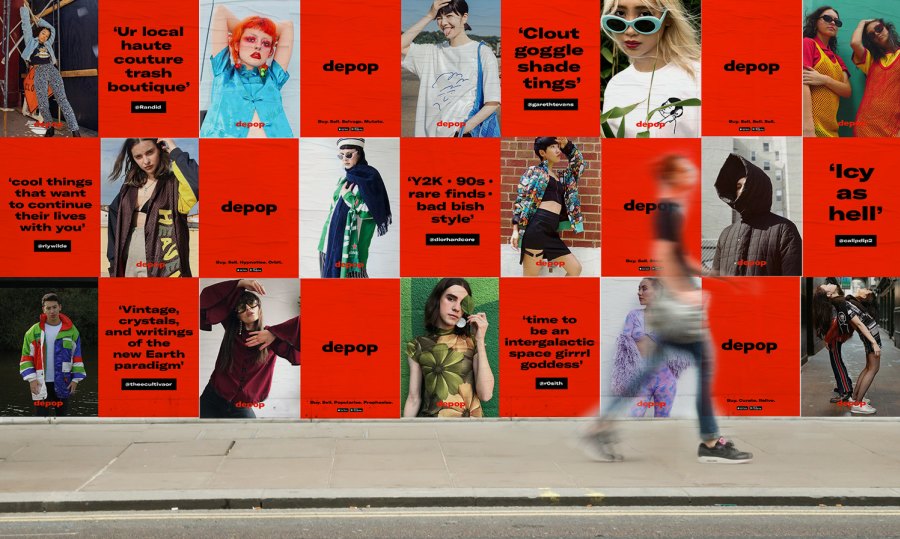
Jill Fisher from Depop made a point on our panel that brands aren’t just buying reach anymore, they’re building presence. And she’s right. Where before they could just pay for that visibility, now they have to show up consistently in these areas to become discoverable. Organic content drives the algorithms, search results and AI recommendations people see – and none of that gets captured by tracking media spend.
What does Depop’s approach tell us about the link between measurement and strategy?
Chris Davis: Jill made an excellent point during our panel: Depop doesn’t just track volume. They pay close attention to the conversations happening underneath creator activity. That’s where they learn what’s resonating, what’s broken and what needs to change. So, rather than obsessing over individual channels, they look at brand health over time:
- Have we shifted brand association?
- Have we driven a genuine conversation?
- Are we maintaining safety and credibility in how we show up?
It’s measurement driving strategy, not the other way around.
CMOs are essentially using the wrong currency to justify creator budgets. They know it works – they can feel it – but they’re struggling to prove it.”
You’ve argued that Share of Voice (SoV) is the key, but also that the current framework is “broken.” Why?
Chris Davis: The metric itself hasn’t broken or changed. What’s moved on is how we measure it. Traditionally, SoV tracked media spend and reach and while that relationship still holds, you can’t measure “voice” solely through media spend anymore.
If 60% of discovery happens via organic creator content and social search, traditional spend-tracking will miss much of the conversation. CMOs are essentially using the wrong currency to justify creator budgets. They know it works – they can feel it – but they’re struggling to prove it – but they’re struggling to prove it using today’s tools.
“By the time you see a dip in sales, you’ve already lost the battle for visibility.”
How do we move from “reporting” on the past to “predicting” the future?
Chris Davis: Most brands are performing a post-mortem, looking at data three months later and trying to correlate it to sales. But by the time you see a dip in sales, you’ve already lost the battle for visibility.
Predictive visibility tells you what’s coming next quarter before it shows up in your revenue data. By tracking creator mentions, content velocity and your competitive position in real-time, we can measure mental availability. If you’re not owning your “share of conversation” today, you won’t be the first brand people think of when they’re ready to buy tomorrow.
“If you’re not owning your share of conversation today, you won’t be the first brand people think of when they’re ready to buy tomorrow.”
Where does brand safety fit into this predictive model?
Chris Davis: Share of voice only drives growth if you’re showing up in the right way, so when we track visibility through organic share of voice, we’re also tracking brand health. Are you being mentioned positively? Is brand sentiment changing? Are there risks emerging in creator content before they become crises?
This matters more as your share of voice grows. If you’re engineering category dominance, you need governance structures – pre-campaign vetting, during-campaign monitoring and post-campaign analysis – that protect it.
How do brands prove commercial impact to their CFO – without relying on viral spikes?
Chris Davis: Success comes down to competitive advantage and at the event, we talked about a Measurement Maturity Model to bridge the gap:
- Level 1: Brand Perception. Likes, comments, and shares. These are inputs – useful for feedback, yes, but they don’t prove you’re building a brand.
- Level 2: Share of Voice. Your visibility in category conversations relative to competitors. This is your leading indicator of revenue growth.
- Level 3: Behaviour Change. Search uplift, web traffic, and platform intent. Are people moving from discovery to action?
- Level 4: Commercial Impact. The full business case, including Media Mix Modelling (MMM) and granular attribution.
You don’t need all four immediately but if you’re stuck at Level 1, you can’t make a commercial case for investment. Only when you can show that you’re capturing 30% of the organic conversation while your competitor has 15% does the conversation move from “it did well on social” – to market dominance.
Finally, what’s the one thing marketers should stop (and start) doing today?
Chris Davis: Stop treating creator marketing as a siloed strategy. You do the channel a disservice when you put the entire burden of brand growth on a single campaign.
As our CEO, Detch, noted, brands need to define what “good” looks like before they launch. Stop chasing viral moments because they’re easy to report and start measuring your percentage of the category conversation. If you’re gaining ground there, the sales will follow.
Building sustained visibility for brand growth is about three things: tracking your competitive position, proving your momentum and defending that visibility in the language of the boardroom.
If you’re interested in a ‘lunch and learn’ where we’ll walk you through our organic share of voice methodology and frameworks that predict revenue – and how that applies to your category, get in touch so we can find a time to come to you.