The New System1 Research Is Great. But Brands Are Applying it Wrong.
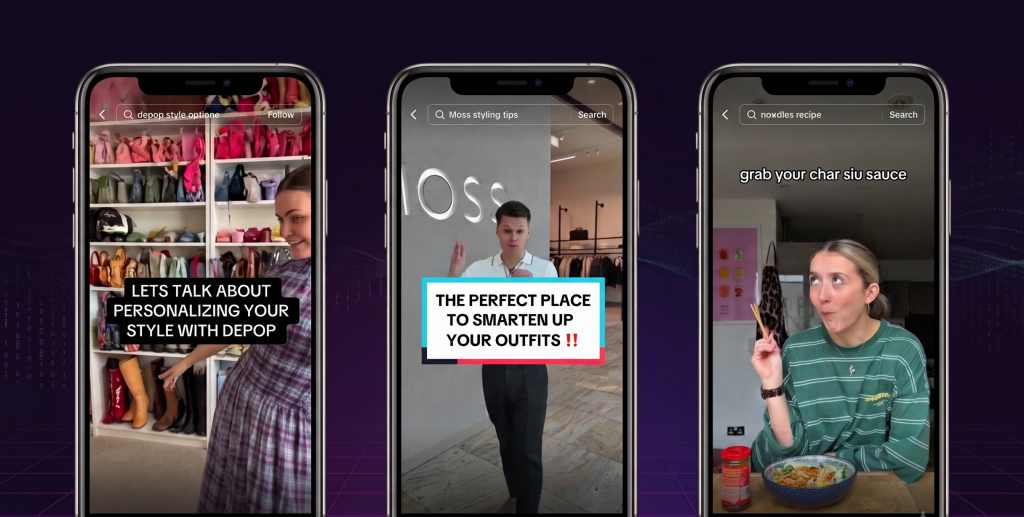
If you’ve worked on a creator campaign over the past few months, there’s a good chance you’ve seen the System1 research referenced in a brief.
The updated study released at Cannes last week in partnership with TikTok and WPP Media, has only accelerated that trend. It’s quickly becoming one of the industry’s go-to references for understanding what makes Creator Ads work and, in my view, rightly so. Drawing on more than 1,200 paid TikTok ads, 182,000 consumers across eight markets, 231 Brand Lift Studies and 23.6 billion impressions, it’s one of the most comprehensive pieces of creator effectiveness research our industry has seen.
More importantly, it moves the conversation towards what really matters: effectiveness. It found that Creative Quality predicts Brand Memory Lift 4.8 times better than engagement alone, giving marketers a much stronger framework for evaluating creator advertising. The attention the report is getting is well earned and deserved.
One recommendation in particular that seems to have travelled quickly: get the brand into the first three seconds.
I’ve already seen it referenced in several briefs, often as a standalone principle rather than one finding within a much broader body of research. While I don’t disagree with the findings of the report, I do think we’re starting to apply it in the wrong way.
The System1 study is examining Creator Ads, yet, those same creative principles are increasingly finding their way into briefs for Creator Content, as though the two are interchangeable. But I can’t stress this enough: they aren’t. They might feature the same creators, promote the same product, and sit within the same campaign, but they’re performing very different jobs.
And that difference starts with the audience.
A Creator Ad is designed to reach people who may never have encountered either the creator or the brand before. It appears because paid media has meticulously put it there. The creative has to quickly earn attention, create emotion and establish brand memory among an audience with no existing relationship to either party.
Viewed through that lens, the recommendations around early branding make complete sense: If you’re paying to interrupt somebody’s feed, establishing the brand early is sensible. That’s exactly what the research proves, and it’s one of the reasons I think it’s such an important piece of work.
But Creator Content starts from a very different place.
The audience has already chosen to follow the creator. They’re there because they enjoy the way that person cooks, trains, dresses, travels, entertains or tells stories. The creator has already earned their attention before the brand enters the picture.
Creator Content doesn’t need to earn trust from scratch because it’s borrowing the trust that the creator has spent years building. That changes the role the content has to play.
The objective of Creator Content is not to make the brand recognisable as quickly as possible, but rather to make the partnership feel natural enough that the brand belongs in the story the creator is telling.
But interestingly, that doesn’t contradict the System1 research at all.
One of the strongest findings in the report is the importance of Brand Fit. Ads in which the brand naturally belonged in the creator’s world generated 58% more emotional response than those where the fit was weaker – more than double the uplift associated with creator fame alone. As the report itself puts it, “the product has a natural place in the creator’s world. The brand does not feel forced into the content.”
A few pages later, there’s another hard-hitter :
“Brand cues have to belong in the moment the creator is building. The ones that do, lift. The ones that interrupt, drag.”
For me, that’s the nuance that’s getting lost.
The takeaway isn’t simply “show the brand in the first three seconds”, it’s that the brand should feel like a natural part of the creator’s story. In a Creator Ad, that moment may well come almost immediately because the creative is doing a different job, but in Creator Content, it may happen a little later because the story itself is what earns the audience’s attention.
That’s certainly what we’ve seen in our own work.
Across a recent Hypetap creator programme, videos over 30 seconds generated a 39% higher impression rate than shorter videos, while engagement remained virtually identical. The interesting finding wasn’t that longer videos performed better. It was why.
Platforms such as TikTok use a range of behavioural signals, including watch time and audience retention, to help determine which content is recommended more widely. In our experience, longer content performs when it gives audiences a reason to keep watching, not simply because it’s longer.
The additional time gave creators room to tell a better story. Rather than rushing to the product, they could build context, create interest and integrate the brand in a way that felt authentic. The audience stayed with the content, sending stronger engagement signals back to the platform, which in turn increased distribution.
That doesn’t mean every Creator Content partnership should be longer. It just proves that audiences are perfectly willing to spend longer with creators when the story is worth staying for.
For some time now, that’s shaped the way we’ve approached creator partnerships at Hypetap.
Rather than asking for one asset to satisfy every objective, we’ve increasingly recommended briefing creators for one piece of Creator Content and one Creator Ad.
The Creator Content is then built for the audience the creator has spent years earning. The brief prioritises storytelling, authenticity and natural brand integration. It should feel at home on the creator’s channel because that’s where trust already exists.
The Creator Ad has a completely different role. It’s designed to be amplified through paid media, reaching audiences who don’t yet know the creator or the brand. That’s where the System1 research becomes incredibly valuable: its guidance around early branding, Distinctive Brand Assets and creative structure provides an evidence-based framework for producing advertising that works harder.
Could the Creator Content later become a Creator Ad? Absolutely. Great content often earns that opportunity. Equally, every Creator Ad should still feel authentic to the creator making it. The point isn’t to create two completely different creative worlds but to recognise that they’re solving two different marketing challenges.
The System1 research gives us a stronger framework for briefing Creator Ads. That’s a significant step forward for the industry.
Creator Content deserves an equally thoughtful framework of its own.
Because while advertising is ultimately trying to earn attention, Creator Content is building on something much harder to create in the first place: trust.
And that’s something no media budget can buy.